How to Index Backlinks Fast in 2026: 7 Proven Strategies
By Joseph C. Lorenzo · Updated August 2026 · 11 min read
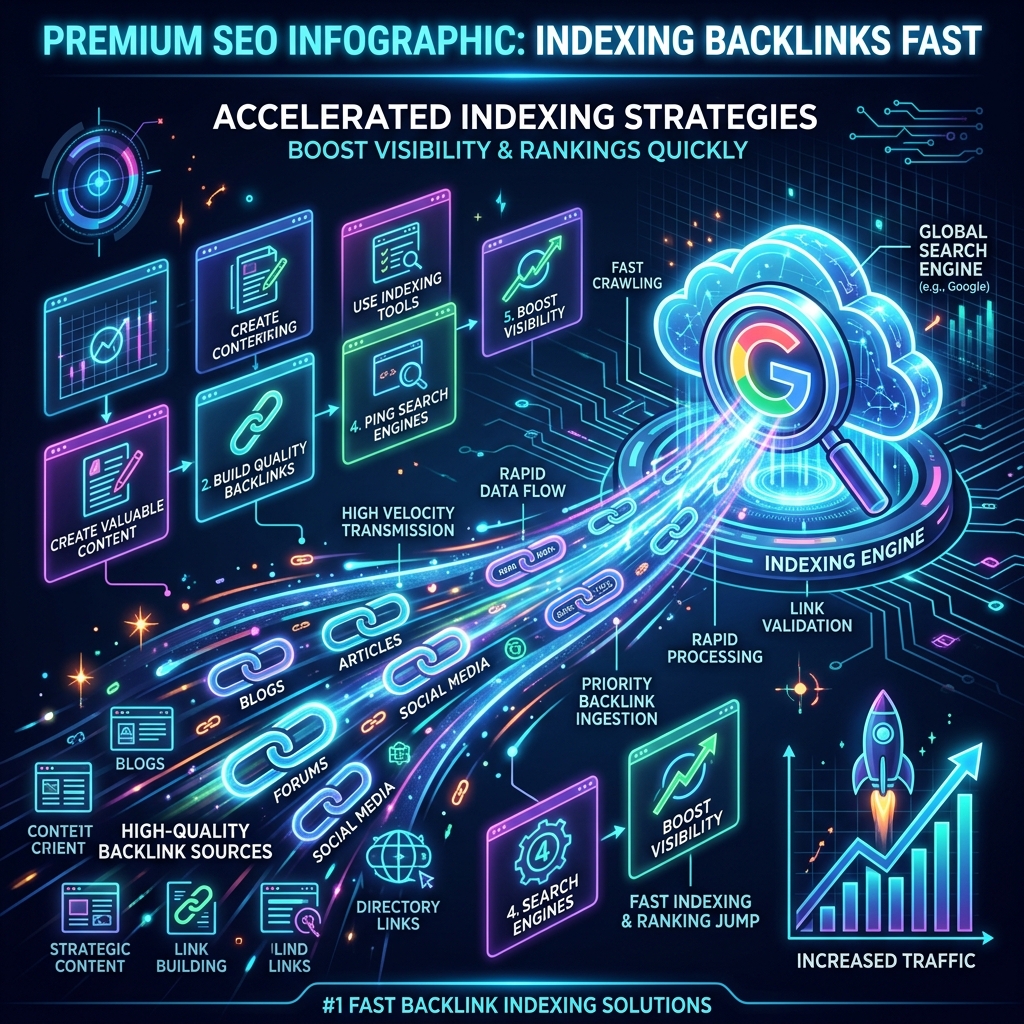
Building backlinks is only half the job. The other half — getting Google to actually index and count them — is where most SEO campaigns silently fail. According to aggregate data from LinkRaptor campaigns, approximately 30–40% of backlinks from average-authority domains remain unindexed after 90 days without active submission efforts. Those links pass zero PageRank and contribute nothing to your rankings.
This guide covers the 7 most effective methods to index backlinks fast in 2026, ranked by effectiveness and scalability. Each strategy is grounded in how Google's crawling and indexing pipeline actually works — not recycled advice from 2015.
Why "Building Links" and "Indexing Links" Are Two Separate Jobs
Google discovers new web pages through three primary mechanisms:
- Following links from already-crawled pages to new ones
- Sitemap submissions via Google Search Console
- Discovery signals — pings, feeds, and API submissions that hint at new content
A backlink on a brand-new Web 2.0 blog is invisible to Google until Googlebot crawls the page hosting it. If that blog is on a low-authority domain with a monthly crawl frequency, your link might not be discovered for months. Active indexing methods create artificial discovery signals that move your URLs to the front of Google's crawl queue.
Strategy 1: Google Search Console URL Inspection (Best for Owned Pages)
For pages on domains you own and have verified in Google Search Console, the URL Inspection tool is the single most direct indexing method available. Click "Request Indexing" after inspecting a URL and Google prioritizes it in the crawl queue, typically resulting in indexation within 24–72 hours for quality content.
Limits: 10–15 requests per day per verified property. Cannot be used for third-party domains hosting your backlinks. Best reserved for your most critical owned pages.
When to use it: New money pages, landing pages, freshly published blog posts on your own domain that need immediate SERP visibility.
Strategy 2: Google Booster Feeds & High-Authority Sitemaps
This is the core mechanism behind professional indexing tools. Instead of submitting URLs directly to Google (which requires domain ownership verification), you publish them into actively crawled feeds and sitemaps hosted on high-authority domains. Googlebot crawls these feeds continuously and discovers the linked URLs as part of its regular crawl cycle.
The mechanics:
- Your target URL is added to an XML sitemap on a high-crawl-frequency domain
- Googlebot crawls the sitemap as part of its scheduled visit to the host domain
- It follows the URL entry in the sitemap and queues your target for crawling
- Your page gets crawled, evaluated, and (if quality is sufficient) indexed
This is LinkRaptor's primary mechanism for third-party backlink URLs. We maintain a network of booster feeds that Googlebot crawls multiple times per day.
Strategy 3: WebSub (PubSubHubbub) Real-Time Pings
WebSub is a W3C standard for real-time content distribution. When you publish a new URL to a WebSub-enabled feed and ping the hub, Google's own WebSub hub (pubsubhubbub.appspot.com) is notified immediately. This triggers near-instant discovery for the feed URL and its linked content.
WebSub is especially effective for news and content pages. Google has confirmed it uses WebSub signals for crawl prioritization. LinkRaptor pings the following WebSub hubs for every submitted job:
https://pubsubhubbub.appspot.com/— Google's official hubhttps://pubsubhubbub.superfeedr.com/— Superfeedr aggregatorhttps://hub.siteground.com/— SiteGround hub
Strategy 4: IndexNow Protocol (Bing & Yandex — Free)
IndexNow is an open-source protocol supported by Microsoft Bing, Yandex, and Seznam. For owned domains, submitting via IndexNow gets your pages indexed in Bing within minutes — literally. Bing has confirmed sub-10-minute indexation for verified IndexNow submissions.
While this doesn't directly help with Google indexation, it provides:
- Immediate Bing coverage (10–15% of search traffic depending on niche)
- Yandex coverage (critical for any Eastern European or Russian audience)
- A crawl signal that third-party link analysis tools (Ahrefs, Majestic) pick up quickly, adding social proof to your backlink profile
Implementation: generate a key at bing.com/indexnow, host the verification file, and send a POST to the IndexNow endpoint with your URL list.
Strategy 5: High-Authority RSS Feed Injection
RSS feeds are one of the oldest and most reliable crawler bait mechanisms still working in 2026. Google's crawler monitors high-traffic RSS aggregators (Feedly, Inoreader, NewsBlur) on continuous cycles. Publishing your target URLs into fresh RSS feeds creates a crawlable discovery path that Googlebot follows.
The key insight: you don't need to own the RSS feed's domain. Submitting the referring page's URL into a feed means Googlebot visits that referring page, sees your backlink, and follows it to your target site.
For best results, use RSS feeds with fresh, recent posts so the feed itself has active crawl priority. A stale RSS feed last updated 6 months ago will have low crawl frequency regardless of domain authority.
Strategy 6: Social Signals & Bookmarking
High-traffic social platforms are crawled by Googlebot around the clock. Sharing the page hosting your backlink on Reddit, Pinterest, Twitter/X, or Mix creates a crawlable link from a high-authority domain directly to your target URL. This is the fastest free mechanism for triggering third-party discovery.
The signal chain:
- You share the Web 2.0 URL on Reddit (r/SEO, r/blogging, or a relevant subreddit)
- Googlebot crawls Reddit within hours (Reddit has massive crawl budget)
- Googlebot follows the Reddit link to your Web 2.0 post
- It discovers your backlink on the Web 2.0 post and follows it to your money site
This creates a multi-hop discovery chain that naturally mimics how real traffic flows — and Google's systems reward genuinely linked content.
Strategy 7: XML-RPC Pings (Supplementary Signal)
XML-RPC pings are the oldest indexing mechanism on this list and have declined significantly in effectiveness since 2018. However, they remain a valid supplementary signal when combined with the strategies above. Tools like Ping-o-Matic let you submit up to 100 URLs at once, notifying dozens of blog aggregators.
Use this as a finishing layer on top of your primary submission strategy — never as a standalone method. The aggregators that still matter (Technorati's successor networks, FeedBurner-compatible directories) do still get crawled by Google. The effect is modest but zero-cost.
Combining Strategies: The Full Indexing Stack
The most effective approach layers multiple signals simultaneously rather than trying each one sequentially. Here's the recommended stack for a 100-URL backlink campaign:
| Step | Method | Time | Coverage |
|---|---|---|---|
| 1 | Google Booster Feed injection | Instant | All URLs |
| 2 | WebSub hub pings | Instant | All URLs |
| 3 | IndexNow (owned domains) | Instant | Owned domains only |
| 4 | XML-RPC pings | Instant | All URLs |
| 5 | Social bookmarking (manual, 2–3 signals/URL) | 15–30 min | Priority URLs only |
| 6 | GSC URL Inspection (owned priority pages) | 2–5 min | 10–15 URLs/day |
Steps 1–4 are handled automatically by LinkRaptor in a single job submission. Steps 5–6 are the manual layer you add for your highest-priority URLs.
What Doesn't Work for Fast Indexing in 2026
Avoid these methods that are either deprecated or ineffective:
- "Submit URL to Google" form: Removed from Google's toolset. Use GSC URL Inspection instead.
- Spam pings to hundreds of dead aggregators: Most ping directories from 2010-era lists no longer function or are ignored by Google.
- Fake traffic generators: Sending bot traffic to a page does not influence Googlebot's crawl decisions. These are also a violation of Google's Webmaster Guidelines.
- Sitemap spam: Submitting tens of thousands of URLs into a sitemap for a new domain doesn't override crawl budget allocation — Google will crawl it on its own schedule anyway.
Deep Dives: Individual Strategies Explained
-
→ How to Get Backlinks Indexed Specifically in Google
Deep dive on Google Indexing API, booster feeds, and Google-specific signals.
-
→ How Long Does Backlink Indexation Actually Take?
Real data on indexation timelines by domain authority and link type.
-
→ Using a Link Indexing Bot: How Automation Works
Technical architecture of modern indexing tools and what separates safe from spam.
Index Your Entire Backlink Profile in One Job
LinkRaptor runs all 7 indexing strategies simultaneously for every URL you submit. Upload your backlink list, select your methods, and let the system handle booster feeds, WebSub pings, IndexNow, and XML-RPC in parallel — with full per-URL status tracking.