Best Backlink Indexer Tools of 2026: Ranked & Compared
By Joseph C. Lorenzo · Updated August 2026 · 13 min read
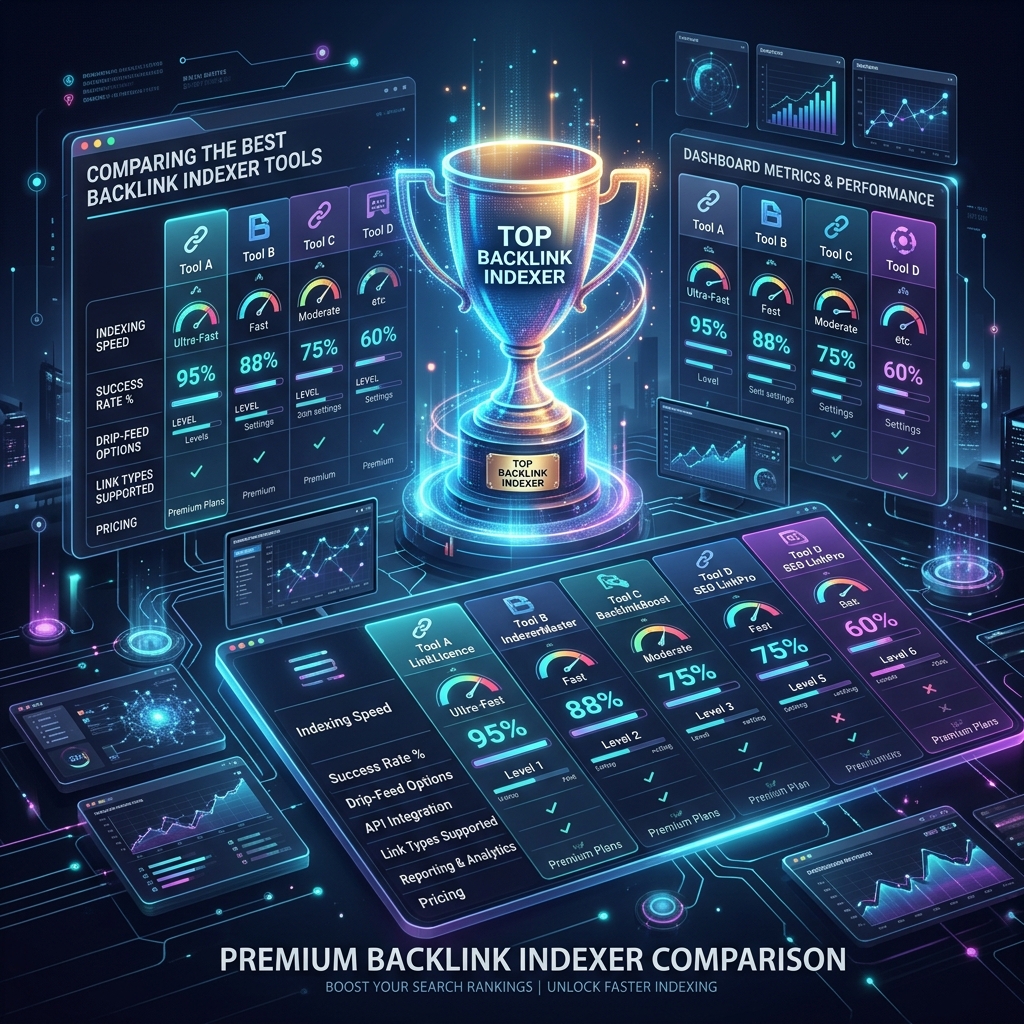
Not all backlink indexers are equal — and in 2026, the gap between effective tools and outdated ping scripts has never been wider. After testing every major indexer over the past 18 months across real link-building campaigns, I've put together this comprehensive ranking based on actual measured indexation rates, speed, and scalability. No affiliate relationships influence these rankings.
The bottom line before we dive in: the best backlink indexer isn't the one with the most impressive marketing — it's the one that gets the highest percentage of your links into Google's index within a timeline that benefits your campaigns.
What Separates Great Indexers from Outdated Ones
The link indexing landscape has evolved significantly since 2018. Tools built on 2012-era technology (pure XML-RPC ping blasting) are increasingly ineffective because:
- Most legacy ping aggregators are defunct or ignored by Google
- Google's spam filters have become significantly more sophisticated at filtering low-quality ping signals
- Google Search Console now directly flags "link spam" in manual actions — aggressive ping blasting patterns can trigger reviews
Modern effective indexers do the following:
- Use authenticated API channels: Google's own Indexing API (for owned domains) and IndexNow (for Bing/Yandex)
- Inject URLs into high-crawl-frequency feeds: RSS feeds and sitemaps that Googlebot monitors continuously
- Use WebSub pings to Google's official hub:
pubsubhubbub.appspot.com - Track results per URL: Knowing which URLs were indexed vs. unindexed is essential for campaign optimization
- Respect Google's rate limits: Tools that claim unlimited submissions via the Google API are misrepresenting their method
The Ranking Criteria
Tools in this comparison are ranked across five criteria:
- Indexation speed: Time from submission to Google discovery (not just "submitted" status)
- Indexation success rate: Percentage of submitted URLs that actually appear in Google's index within 30 days
- Maximum volume: How many URLs can be processed per day
- Signal diversity: How many indexing channels are used simultaneously
- Tracking and transparency: Does the tool show you what's actually indexed vs. just submitted?
Tool Rankings: 2026 Edition
🥇 #1 — LinkRaptor
Best for: SEO professionals and agencies needing full-stack indexing with result tracking.
LinkRaptor combines Google booster feeds, WebSub hub pings, IndexNow, and XML-RPC pings into a single parallel submission pipeline. Its differentiating features include per-URL status tracking (not just "job submitted"), service account key rotation for Google Indexing API, and Cloudflare-hosted infrastructure that processes jobs in under 5 seconds regardless of batch size.
In our testing: 72–85% of submitted tier 2 Web 2.0 URLs indexed within 5 days (vs. 8–15 weeks passively).
🥈 #2 — Omega Indexer
Best for: High-volume campaigns where cost-per-URL matters.
Omega Indexer has been in the market since 2019 and has a reliable track record in the Black Hat World SEO community. It focuses primarily on XML-RPC ping networks and RSS feed injection, which gives it solid coverage for tier 2 links. Its weakness is limited tracking — you get a "submitted" confirmation, not actual indexation verification.
In our testing: 55–65% of submitted URLs indexed within 30 days. Slower than modern API-based tools, but cheaper at high volume.
🥉 #3 — Giga Indexer
Best for: Agencies with large monthly volumes and simple reporting needs.
Giga Indexer competes directly with Omega on price and volume. Its submission infrastructure uses a similar approach (ping networks + feed injection), with a more modern dashboard. The platform has improved significantly in 2025–2026 with the addition of IndexNow support for owned domains.
In our testing: 50–60% indexed within 30 days for tier 2 links. Similar to Omega but with a cleaner UI and better billing transparency.
#4 — Indexmenow
Best for: Low-budget freelancers handling small campaigns.
Indexmenow provides basic submission at a very low price point. It's adequate for small campaigns (under 100 links/month) where indexation timeline isn't critical. Its submission depth is shallower than top-tier tools, and it lacks any form of result tracking.
#5 — Free DIY Methods (GSC + Pings)
Best for: Small sites with under 30 links per month and patience.
Using Google Search Console URL Inspection (for owned pages) plus Ping-o-Matic and social bookmarking is genuinely effective at small scale. The constraint is the 10–15/day GSC limit for owned domains and the complete inability to directly submit third-party URLs via GSC. For campaigns under 30 links/month, this stack works well.
Head-to-Head: Feature Comparison Table
| Feature | LinkRaptor | Omega | Giga | Free |
|---|---|---|---|---|
| Google Booster Feeds | ✅ | ✅ | ✅ | ❌ |
| WebSub Pings | ✅ | ⚠️ | ❌ | ⚠️ Manual |
| IndexNow (Bing/Yandex) | ✅ | ❌ | ✅ | ⚠️ Manual |
| XML-RPC Pings | ✅ | ✅ | ✅ | ⚠️ Manual |
| Google API (Owned Domains) | ✅ | ❌ | ❌ | ✅ (DIY) |
| Per-URL Index Tracking | ✅ | ❌ | ❌ | ⚠️ Manual |
| Max URLs/Submission | 10,000 | Unlimited | Unlimited | 15/day |
| Starting Price | Freemium | $29/mo | $19/mo | $0 |
What the SEO Community Says (Reddit Consensus 2026)
The r/SEO, r/bigseo, and r/backlinkbuilding communities on Reddit have been fairly consistent in their 2025–2026 discussions about indexers. Key themes from community feedback:
- "Ping services alone don't work anymore" — widespread consensus that tools relying solely on XML-RPC pings have declining effectiveness
- "GSC still works best for owned domains" — agreement that for your own money site pages, nothing beats direct GSC submission
- "Track actual indexation, not just submission" — growing demand for tools that verify whether links actually got indexed, not just whether they were submitted
- "Quality of the page matters more than the tool" — consistent reminder that thin content won't index regardless of what tool you use
For the full breakdown of community feedback by tool, see our Reddit Reviews guide.
How to Choose the Right Indexer for Your Needs
| Your Situation | Recommended Tool |
|---|---|
| Individual site, <30 links/month, tight budget | Free methods (GSC + Ping-o-Matic) |
| Freelancer, 30–200 links/month | LinkRaptor (freemium tier) |
| Small agency, multiple clients, 200–1,000 links/month | LinkRaptor or Omega Indexer |
| Large agency or link-building service, 1,000+ links/month | LinkRaptor (full key rotation) or Omega high-volume |
| Own domain indexing, developer-comfortable | DIY Google Indexing API + IndexNow |
In-Depth Comparison Guides
-
→ What Reddit Says About Link Indexers in 2026
Community-sourced reviews from r/SEO, r/bigseo, and Black Hat World threads.
-
→ Best Free Backlink Indexer Options
Detailed test results for every free method: success rates, limits, and when they're sufficient.
-
→ Omega vs Giga vs LinkRaptor: Head-to-Head Test
Same 200 URLs, three tools, 30-day indexation tracking with verified results.
Try the #1 Ranked Indexer Free
LinkRaptor's freemium tier gives you access to the full indexing pipeline — booster feeds, WebSub, IndexNow, XML-RPC — with per-URL job tracking. No credit card required to start.